
If your denture rubs a sore spot into your gums, clicks when you talk, or lets food slide underneath, that is your mouth telling you the fit has changed.
It happens to nearly every denture wearer eventually, and it is not a sign you did anything wrong.
The good news is that several denture adjustment options can address common fit problems without immediately replacing your denture.
Depending on the problem, a dentist may smooth a pressure point, correct an uneven bite, or reline the inside surface for a closer fit.
Denture rubbing or feeling loose usually points to one of three fixes: a small pressure-spot adjustment, a bite correction, or a reline that reshapes the inside of the denture to match your gums today.
Which one you need depends on what your symptoms look like and how much your gum and bone shape have changed since the denture was made.
Key Takeaways
- Rubbing, clicking, and food trapping each point to a different in-office fix, so the symptom guides the solution.
- Bone and gum changes after tooth loss are the main reason a once-comfortable denture loosens over the years.
- Denture adhesive is a short-term helper, and daily use every day is a signal to get the fit checked.
What Rubbing and Movement Can Tell You About Denture Fit
Rubbing and movement are two different messages. Rubbing points to a spot where the denture base presses too hard on gum tissue, while movement points to a loss of overall denture stability, meaning the denture no longer seals against the shape of your ridge.
Signs That a Denture Needs Attention
Watch for these patterns:
- Sore spots in the same place every time you wear the denture
- Rocking or lifting when you bite down on one side
- Clicking sounds while you speak
- Food packing under the base during meals
- Gum irritation, redness, or a white patch that lingers after a day of rest
- Needing adhesive every single day just to get through a meal
A single sore spot after a long day is common. A sore that returns to the same location week after week is a pressure point that needs to be relieved by a professional, and ignoring it can lead to oral lesions on already sensitive gums.
Why Lower Dentures Often Feel Less Stable
Lower dentures have a harder job. They rest on a smaller surface area with less suction, and your tongue, cheeks, and the floor of your mouth push against them constantly.
Upper dentures cover the palate, which gives them a broad seal. That difference is why many people wear an upper comfortably for years while the lower one shifts, and why lower dentures are more likely to need relining sooner.
Why New Dentures May Feel Different During Healing
New dentures feel bulky and unfamiliar for the first several weeks, and that is expected. Your gums are still firming up after extractions, and your muscles are learning how to hold the appliance in place.
Expect a few adjustment visits during this stretch. Each one trims the spots your tissue is telling you about, which is normal early care for dentures and partials rather than a sign the denture was made poorly.
Why a Denture That Once Fit Well Can Become Loose
A denture is a snapshot of your mouth on the day the impression was taken, and your mouth keeps changing after that.
Bone shrinks, gums flatten, denture teeth wear down, and your bite drifts, all of which loosen a fit that was once snug.
Bone Resorption After Tooth Loss
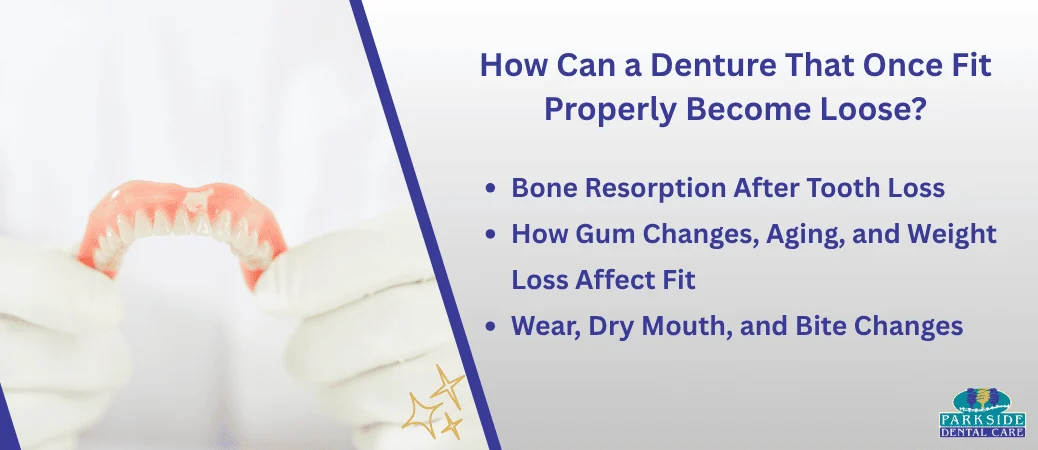
Bone needs stimulation from tooth roots to hold its shape. Once teeth are gone, the jaw begins remodeling in a process called bone resorption, which reduces both ridge height and bone density in the areas that used to support your teeth.
This is the single biggest reason dentures loosen. As the ridge flattens, the denture base no longer matches the curve it was molded to, so it starts to rock during chewing.
Bone loss after missing teeth continues quietly for years, which is why a fit can slip away without any obvious event.
How Gum Changes, Aging, and Weight Loss Affect Fit
Gum tissue shrinks and thins along with the bone underneath it. Small gaps open where the denture used to seal, and suction weakens.
Significant weight changes can affect facial fullness and the soft tissue supporting a denture, which may contribute to changes in fit.
Wear, Dry Mouth, and Bite Changes
Denture teeth wear flat over years of chewing. Worn denture teeth change how your upper and lower arches meet, which shifts pressure onto areas that were never meant to carry it.
Dry mouth removes the thin film of saliva that helps a denture seal and glide. Many common medications reduce saliva, and less moisture means more friction and more rubbing.
Partial dentures add another variable, since the natural teeth holding the clasps can move or wear too.
Which Professional Adjustment Option Fits the Problem?
Your symptoms can help identify which adjustment may be appropriate.
At Parkside Dental Care, Dr. David Loveless can evaluate how your denture fits against your gums and how your bite comes together before recommending an adjustment, bite correction, reline, or another option.
Pressure-Spot and Edge Adjustments
This is the quickest denture adjustment, and it often takes one short visit. The dentist marks the sore area with a pressure-indicating paste, finds the matching high spot inside the denture, and smooths it away.
Edges are the other frequent culprit. A border that sits slightly too long presses into the tissue where your cheek moves, which produces a sore in a predictable line. Trimming and polishing that border relieves it.
Bite Corrections and Denture Adjustments
When a denture rocks or tips as you chew, the problem sits in how the teeth meet. High contact points on one side lever the opposite side upward, which causes rubbing far from where the real fault lies.
The dentist checks your bite with marking paper and reshapes the contacts so pressure spreads evenly. Fixing the bite quietly resolves sore spots that no amount of base trimming could settle.
When a Denture Reline Can Restore a Closer Fit
A reline addresses the space that opens between your gums and the denture as bone and gum shrink.
A new impression is taken with the denture in your mouth, and fresh acrylic is added to the inside surface so it matches your current ridge.
Denture relining works well when the denture teeth are still in good shape and the bite is sound. It restores suction and stops the rocking without rebuilding the entire appliance.
Soft Reline vs. Hard Reline
The two relines serve different needs.
| Soft Reline | Hard Reline | |
| Material | Pliable, cushioning liner | Rigid acrylic, same as the denture base |
| Best for | Tender or sensitive gums, thin ridges, healing tissue | Stable tissue, long-term fit correction |
| Typical lifespan | About 1 to 2 years | Roughly 2 to 5 years |
| Comfort on sore gums | Higher | Moderate |
| Durability | Lower, needs replacing sooner | Higher |
Soft liners cushion tissue that has thinned over a sharp ridge, which helps people who cannot tolerate acrylic pressing directly on the gums.
Hard relines last longer and hold their shape better, so they are the usual choice when your tissue is healthy and stable.
When Adhesive Is Temporary and a Reline May Not Be Enough
Denture adhesive is a bridge to your appointment, and it works well in that role. A reline reaches its limit when the denture itself is worn out, cracked, or built for a bite that no longer exists.
How to Use Denture Adhesive Without Masking a Fit Problem
Use the smallest amount that helps, applied in thin strips or small dots on a clean, slightly damp denture.
Piling on more paste to compensate for looseness changes how the denture seats and can throw off your bite.
Clean the adhesive off completely every night, since leftover residue builds up and irritates gum tissue.
Follow the manufacturer’s directions when using denture adhesive and avoid applying more than recommended. If you rely on adhesive frequently to keep your denture stable, ask your dentist to evaluate the fit.
The honest limit: adhesive improves grip, and it cannot rebuild bone, reshape your ridge, or restore lost suction. Reaching for it several times a day means the fit needs professional attention.
When Denture Replacement Is the Better Choice
Denture replacement makes more sense than relining when the appliance has aged past repair.
Signs include worn denture teeth that no longer chew efficiently, cracks or repairs in the base, a bite that has collapsed, and recurring gum irritation that adjustments no longer settle.
Denture replacement may be more appropriate when the teeth are significantly worn, the base is cracked or repeatedly repaired, or changes in the bite can no longer be corrected adequately with a reline.
If bone loss has been severe, some people also explore implant-retained dentures or overdentures anchored by dental implants, which sometimes require bone grafting first to rebuild the ridge.
Our team at Parkside Dental Care walks through those tradeoffs before anything is decided.
When Persistent Sores Need Prompt Dental Care

Seek a dental evaluation for any sore that lasts more than two weeks, bleeds, grows, or does not appear to be healing.
Long-standing pressure can create oral lesions that need evaluation, and a lasting ulcer deserves a look regardless of the cause.
Leave the denture out as much as you can until your visit, and rinse with warm salt water a few times a day. Bring the denture with you, since the fix usually happens on the appliance itself.
Routine exams also catch things you cannot see, as an oral exam reveals more than most people expect.
Protecting a Comfortable Fit Between Visits
Daily habits protect the fit you paid for. Clean dentures seal better, healthy gum tissue tolerates pressure better, and regular check-ups catch small changes before they turn into sores.
Daily Denture Care That Supports Comfort
Brush your denture every day with a soft denture brush and a denture cleaner made for the job. Regular toothpaste is abrasive and scratches acrylic, and those scratches collect plaque that irritates gums.
Rinse after meals, and give your tissue a rest by leaving the denture out overnight in water or a soaking solution.
Brush your gums, tongue, and palate with a soft brush each morning to keep oral hygiene strong and circulation healthy.
Handle the denture over a folded towel or a sink of water. Dropping it on a hard surface is the most common cause of hairline cracks that later distort the fit.
Why DIY Repairs and Home Relines Can Make Fit Worse
Over-the-counter reline kits and home adjustment tools cause more problems than they solve.
The liner material sets unevenly, adds thickness where you do not need it, and locks in a bite error that then wears your gums down in a new spot.
Filing a denture at home removes material you cannot replace. Household glue is worse, since it is not safe for the mouth and it makes a professional repair harder or impossible.
If your denture cracks, wrap it and bring it in, and skip the hardware-store fix.
When to Schedule Dental Check-Ups
Denture wearers should be seen once a year even with no complaints, and sooner if something changes.
An annual visit lets your dentist check tissue health, screen for lesions, and measure how much the ridge has changed since last time.
Book a denture adjustment right away for a new sore, fresh clicking, or a sudden change in how the denture seats. Waiting turns a five-minute trim into weeks of healing.
Parkside Dental Care schedules these as focused short visits, and what to expect at a first visit covers how the appointment runs.
Getting Back to Comfortable, Stable Dentures

Loose dentures are a fit problem with a fit solution, and most of those solutions keep your current denture in use.
A pressure spot gets smoothed, an uneven bite gets balanced, and a ridge that has shrunk gets addressed with denture relining that restores suction.
Match the symptom to the step. Sore in one spot means an adjustment; rocking under pressure means a bite check; general looseness with good teeth means a reline; worn teeth and a collapsed bite mean it is time for a new set.
Daily cleaning, nightly rest for your tissue, and yearly exams protect both denture stability and your broader oral health.
The team at Parkside Dental Care can sort out which step fits your situation at a single appointment, and if you would like to look at a different path entirely, read about an alternative option for people tired of dentures.
Frequently Asked Questions
Can a dentist adjust dentures that are rubbing my gums?
Yes, and it is one of the fastest fixes available. The dentist marks the sore area, locates the matching high spot inside the denture, and smooths it down, often in a single short visit.
Bring the denture and wear it to the appointment so the pressure pattern is visible.
How do I know if I need a denture adjustment or a reline?
A denture adjustment suits localized problems, like one sore spot or a single edge that digs in. A denture reline suits general looseness, weak suction, and food sliding underneath, which signal that your ridge has changed shape overall. If both are happening, the reline usually comes first and small adjustments follow.
How long does a soft reline last?
A soft reline holds up about one to two years before the material stiffens or discolors and needs replacing.
The cushioning liner is chosen for tender gums and thin ridges, so it trades durability for comfort. A hard reline lasts longer, roughly two to five years, when your tissue can tolerate rigid acrylic.
Can denture adhesive fix loose dentures permanently?
No. Denture adhesive improves grip for a few hours at a time, and it cannot rebuild bone, reshape a shrinking ridge, or correct a bad bite.
Needing it every day, or reapplying midday, is a reliable sign the denture needs a professional reline or remake.
Should I wear my dentures if they are causing sore spots?
Keep wear to a minimum until you are seen, and leave the denture out whenever you can so the tissue can heal. Continuing to wear a denture over sore spots deepens the ulcer and lengthens recovery.
Rinse with warm salt water and call for an appointment rather than pushing through the discomfort.
When should loose dentures be replaced instead of relined?
Denture replacement is the better call when the teeth are worn flat, the base is cracked or repeatedly repaired, or the bite has collapsed so far that relining would not restore function.
A denture that is 7 to 10 years old often falls into this group. Relining is the right choice when the teeth and bite are still sound and only the fit against your gums has changed.