
Veneers for uneven teeth may be a suitable option when your main concerns are chipped edges, mismatched tooth lengths, or stubborn discoloration, and your tooth positions and bite allow a conservative cosmetic result.
Veneers change the visible shape and appearance of your teeth, while clear aligners gradually move teeth into different positions.
If you’re asking, “Can veneers fix uneven teeth?”, the answer is yes for some kinds of unevenness. A veneer can make a small tooth look wider or restore a worn edge.
Your roots stay in the same position, so any underlying alignment problem still needs its own assessment.
Your decision also involves healthy enamel and future care. Straightening first sometimes leaves you needing only small touch-ups, while veneers involve maintaining restorations over time.
When Does Cosmetic Reshaping Make More Sense Than Moving Teeth?
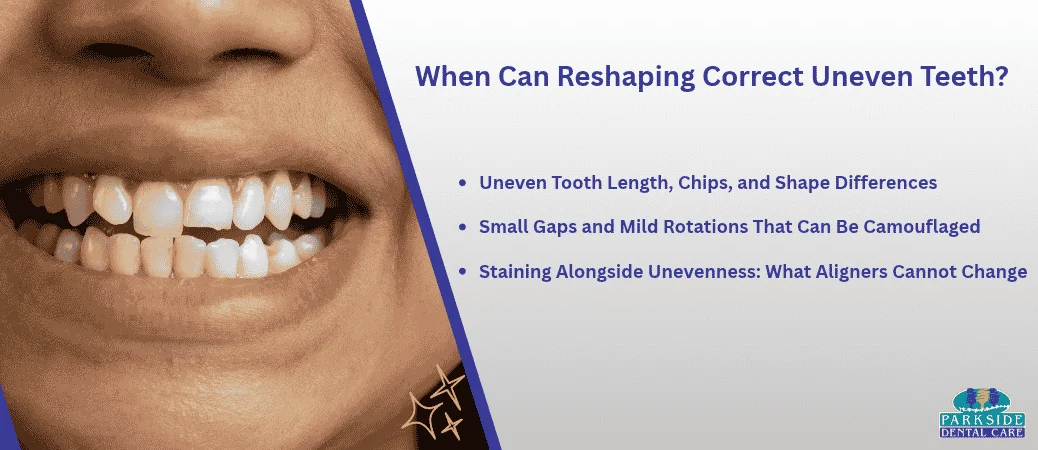
Cosmetic reshaping makes more sense when your uneven appearance comes mainly from tooth shape or surface damage and your bite functions well.
Your treatment should address the specific teeth that concern you while preserving healthy tooth structure.
| Your concern or commitment | Veneers | Clear aligners |
| Uneven lengths or chips | Reshape visible surfaces | Preserve existing shapes |
| Tooth position | Camouflage limited unevenness | Move teeth and roots |
| Stained teeth | Cover discoloration | Preserve existing color |
| Healthy enamel | Preparation often required | No veneer preparation |
| Long-term care | Restoration maintenance | Retainer wear |
Uneven Tooth Length, Chips, and Shape Differences
If your teeth sit in suitable positions but have different shapes, dental veneers offer a way to change their visible proportions.
Veneers may help improve the visible proportions of naturally small teeth or restore the appearance of chipped or uneven edges when the remaining tooth structure and bite support this approach.
Your dentist should explain why an edge is uneven before adding material. Grinding or an uneven bite requires attention because the same forces that wore your enamel also put stress on a restoration.
For a small chip, localized bonding may be sufficient. During your consultation, ask which teeth need treatment and whether a smaller repair could achieve your cosmetic goals.
Small Gaps and Mild Rotations That Can Be Camouflaged
Small gaps between teeth sometimes close neatly by adding width to narrow teeth. Your dentist needs to check the resulting proportions: closing a space by making an already-wide tooth wider risks a bulky appearance.
With a mildly rotated tooth, veneer design changes the visible front surface. Your dentist must balance the added material against the preparation needed on the projecting side.
If you want to fix crooked teeth without braces, ask to see the proposed tooth shape from the side as well as the front.
For gapped teeth or slight crookedness, a front-view preview alone gives you limited information about thickness and bite contact.
Staining Alongside Unevenness: What Aligners Cannot Change
When you have stained teeth alongside worn edges or shape differences, veneers address several appearance concerns within the same restorative plan. Clear aligners leave your natural tooth color unchanged.
Before covering healthy enamel, discuss whether teeth whitening would provide enough color improvement. If whitening meets your shade goal, you might only need bonding on the uneven edges.
For discoloration that responds poorly to whitening, your dentist should explain the material thickness needed to mask it. A brighter shade sometimes requires additional space, which affects preparation.
When Are Aligners or Braces the Better Choice?
Orthodontic treatment, such as clear aligners or braces, may be more appropriate when unevenness results from crowding, substantial tooth rotation, or bite problems.
The recommended approach depends on the type and complexity of the alignment concern.
Crowding and Bite Problems That Veneers Cannot Correct
If you have crowded teeth, veneers leave the underlying overlap and root positions unchanged. Trying to cover significant overlap risks excessive tooth reduction or restorations that are difficult to clean.
Your bite assessment should identify an overbite, crossbite, underbite, or open bite. These bite issues fall under malocclusion, the clinical term for teeth that meet incorrectly.
A dental evaluation can help determine whether clear aligners can address crowding or bite issues. More complex alignment or jaw-related problems may require assessment by an orthodontist or another specialist.
How Invisalign and Braces Change Tooth Position
With clear aligners, you wear a prescribed sequence of removable trays that apply controlled forces to your teeth. Traditional braces use fixed brackets and wires to guide tooth movement throughout treatment.
Your Invisalign treatment process includes examination, records, movement planning, and progress checks.
Tooth-colored attachments or small adjustments between teeth might form part of your plan; ask what your case requires before you agree to treatment.
Your bite alignment needs attention throughout orthodontics. Even a limited cosmetic plan requires careful assessment and informed consent, including a clear explanation of which bite concerns your treatment will address.
Could Straightening First Reduce the Need for Veneers?
Straightening first gives you a clearer view of which shape concerns remain once your teeth are aligned.
A tooth that looks short because it sits higher than its neighbor might need a position change before any restorative decision.
If you’re considering orthodontic treatment as an adult, ask your provider to coordinate movement with any planned cosmetic work. Creating suitable spacing sometimes allows smaller restorations and less preparation.
Reassess your smile when movement is complete. You might choose whitening, a small bonded repair, or no further cosmetic treatment.
What Should You Know Before Committing to Veneers?
Before committing to veneers, you need a tooth-by-tooth explanation of preparation, suitability, and future maintenance. Your consent should include the limits of the result and the alternatives that preserve more enamel.

How a Dentist Assesses Your Bite, Enamel, and Gum Health
At Parkside Dental Care, Dr. David Loveless can evaluate your existing restorations, enamel quality, gum health, and bite before recommending veneers.
Photographs and digital scans may support treatment planning, while X-rays provide additional information when clinically indicated.
Your cosmetic dentist should also examine how your teeth contact during chewing and side-to-side movements. If you clench or grind, ask how those forces will be managed after treatment.
Slight alignment irregularities alone do not require ceramic veneers. Ask why veneers are appropriate for your particular teeth, especially when your enamel is healthy and your concern is minor.
Porcelain Veneers, Composite Veneers, or Localised Bonding?
Your choice between dental bonding and veneers should reflect how much surface needs changing. For an isolated chip or narrow gap, localized composite bonding limits treatment to the affected area.
Porcelain veneers offer good stain resistance and a stable surface finish. Your dentist needs enough room for the ceramic to fit without excess thickness, so preparation depends on your tooth position and the intended change.
Composite veneers cover a broader area with tooth-colored resin. You gain easier repair options, but you should expect polishing and maintenance as the material wears or stains.
From Smile Preview to Preparation and Placement
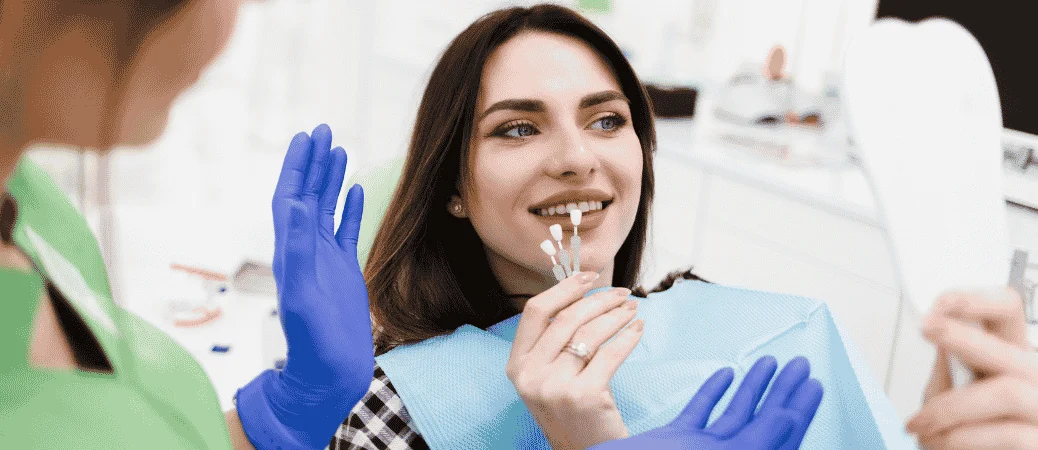
Your veneer process starts with defining the changes you want and checking whether they work with your bite. Digital smile design or a physical mock-up helps you discuss tooth length, fullness, edge shape, and shade.
During personalized smile makeover planning, ask whether you can assess a mock-up in your mouth. Speaking and closing your teeth provide useful checks that a digital image alone cannot supply.
Before veneer preparation, confirm where enamel removal is planned. Removed enamel does not grow back, so a prepared tooth carries an ongoing restorative commitment.
At veneer placement, your dentist checks fit and bite contacts before completing bonding.
How Do Costs, Timelines, and Long-Term Care Compare?
You get a useful comparison by pricing each complete treatment pathway and its future care. A per-tooth veneer fee and a complete aligner fee cover different work.
Compare Per-Tooth Veneer Quotes With Complete Aligner Plans
When comparing cost estimates for veneers, request the total for all teeth included in your treatment plan. Ask whether the estimate includes planning appointments, temporary restorations when needed, and follow-up care.
For an aligner plan, ask whether your quote includes:
- Examination and treatment records.
- Supervised progress visits.
- Additional aligners if refinements are needed.
- Initial retainers and replacement fees.
Your total treatment cost may also change if you choose cosmetic treatment after straightening. Ask your dental team for a personalized estimate that explains the recommended procedures, treatment stages, and anticipated follow-up care.
Fewer Visits vs. Months of Supervised Tooth Movement
Your veneer treatment might finish sooner because it changes tooth surfaces without waiting for biological movement. Porcelain work involves planning and fabrication, while direct composite treatment sometimes fits into a single treatment appointment.
With clear aligners, your schedule follows the movement needed and your response to treatment. Daily wear and supervised reviews are part of that commitment.
Ask for a personalized timeline that includes any preliminary dental care. If you have a deadline, confirm what is realistic before starting preparation or ordering aligners.
Veneer Repairs and Replacement vs. Ongoing Retainer Wear
Your veneers require daily brushing and cleaning between teeth, plus regular dental checks. The natural tooth around a veneer remains vulnerable to decay, and your gums still need care.
Plan financially for future repairs or replacement without treating a projected lifespan as a guarantee. Composite damage is often repairable in the mouth; a damaged porcelain veneer sometimes needs remaking.
After orthodontic treatment, your retainers help maintain tooth position. Follow your prescribed wear schedule and arrange a fit check if a retainer becomes loose, damaged, or difficult to seat.
Choose Treatment That Addresses the Cause of Unevenness
Veneers may be appropriate when your main goals involve tooth shape, length, or color and your teeth support conservative preparation.
Clear aligners or other orthodontic treatment may be more suitable when tooth position or bite alignment is the primary concern.
If both concerns apply, ask whether straightening your teeth first could reduce the need for cosmetic restorations.
At Parkside Dental Care in Montgomery, AL, our dental team can evaluate your smile, discuss your cosmetic goals, and explain whether veneers, clear aligners, or a combination of treatments may be appropriate.
Frequently Asked Questions
Your suitability for veneers rests on the condition and position of your teeth, along with your bite. These answers help you prepare specific questions for your examination.
Can I get veneers if my front teeth are slightly crooked?
You can be considered for dental veneers when the crookedness is mild and your bite allows a conservative design. Your dentist should check whether masking the position would require excessive preparation or create bulky teeth.
Why might a dentist discourage veneers for uneven teeth?
Your dentist might discourage veneers if your proposed result requires substantial tooth reduction or leaves important bite problems untreated. Active gum disease, decay, limited enamel, or uncontrolled grinding also require attention before cosmetic treatment.
Are composite veneers a less invasive option than porcelain?
Composite veneers may offer a more conservative option when the desired cosmetic changes can be achieved by adding resin with minimal or no enamel removal. However, preparation requirements depend on tooth position, shape, and the planned result.
Can before-and-after pictures show whether veneers will work for me?
Before-and-after pictures help you describe your preferences, but your suitability requires an examination. Ask for examples with similar starting conditions and a mock-up that shows the proposed changes on your own teeth.
Will I still need retainers if I get veneers after Invisalign?
Yes, you still need retainers after Invisalign because veneers do not hold your teeth in their corrected positions. Your team should coordinate veneer placement with retention and check whether your existing retainers need adjustment or replacement.