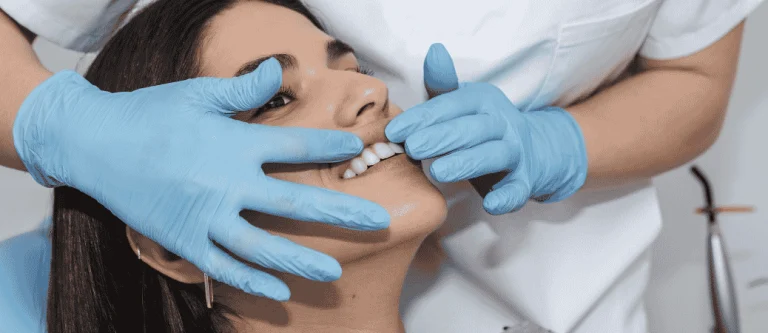
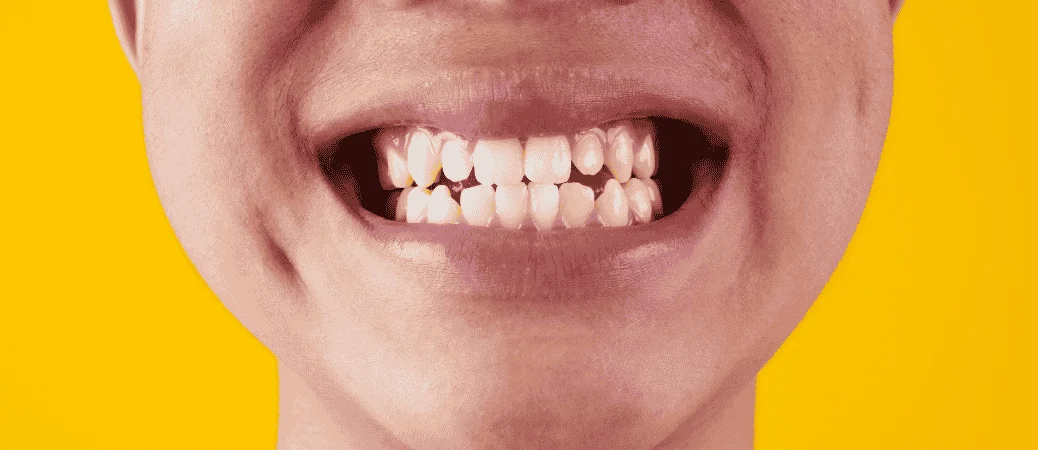
Tartar buildup on teeth requires professional removal once plaque has hardened into firmly attached mineral deposits that brushing cannot remove.
If you feel a ridge or gritty patch after brushing, schedule a professional dental cleaning and exam to identify the cause and determine whether hardened deposits need removal.
You might notice the buildup behind your lower front teeth even when you brush regularly. That does not mean you have failed at home care.
Keep cleaning gently while you wait for your appointment, and leave scraping tools out of your routine.
What Is That Rough Ridge on Your Teeth?
A persistent ridge on your teeth could be tartar, especially near your gumline. Your dental team needs to examine the area to distinguish a deposit from a change in your enamel or dental work.
Plaque vs. Tartar: Why Hardened Deposits Resist Brushing
You develop plaque on your teeth as bacteria collect in a soft, sticky layer called a bacterial biofilm. Your brushing and daily cleaning between teeth break up that layer.
When plaque stays in place, minerals in your saliva harden it into tartar, also called calculus. The resulting deposit clings firmly to the tooth surface. Your toothbrush bristles flex against that hard material without lifting it away.
You might feel soft plaque as a fuzzy coating and tartar as a raised, rough edge. Touch alone cannot confirm which material you have, especially around fillings or crowns.
Why Buildup Often Starts Behind the Lower Front Teeth
Your lower front teeth sit close to openings that release saliva from glands beneath your tongue. Minerals in that saliva help harden plaque left on those surfaces.
You also have a narrow space to clean on the tongue side of these teeth. A quick horizontal pass with your brush might miss the gumline. Turn a manual brush vertically and use gentle, short strokes to clean each inside surface.
You may notice similar buildup on the cheek side of your upper back teeth, near another saliva duct opening. Give these areas deliberate attention during your daily routine.
What Yellow, Brown, or Black Deposits Can Mean
You might see pale yellow or tan deposits above your gumline. Coffee, tea, and tobacco stain deposits over time, while buildup below your gums sometimes looks brown or black.
Blood pigments associated with gum bleeding can contribute to the darker appearance of tartar beneath the gumline. The color of a deposit alone does not reveal its age or the severity of gum disease.
You also cannot identify decay by color alone. A dark area needs examination because stain, tartar, and cavities require different care.
Can You Safely Remove Tartar at Home?
You cannot safely and reliably remove attached tartar at home. Your home tools help control soft plaque, while professional dental tools require training and a clear view of the tooth surface.

Why Brushing Harder and DIY Scrapers Can Cause Harm
Your gums and exposed roots take the force when you scrub a stubborn deposit. Heavy pressure contributes to gum recession and wear, especially along exposed root surfaces.
Using sharp picks or online scraping kits puts your gum tissue and dental work at risk.
You have limited visibility behind your teeth, and a slipping tip can cause an injury. Buying a tool shaped like a dental instrument does not give you the training to use it safely.
If you seek care at Parkside Dental Care, point out the exact spot your tongue keeps finding. That helps your clinician examine the concern without assuming every rough patch is tartar.
Why Toothpaste, Water Flossers, and Home Remedies Cannot Remove Hardened Deposits
Your electric toothbrush and water flosser support daily plaque control. Their cleaning action does not replace the controlled scaling needed to detach hardened deposits.
Tartar-control toothpaste helps limit new mineral buildup. It does not dissolve the tartar already attached to your teeth. A product labeled “tartar control” describes prevention, even if its name sounds like a removal treatment.
Avoid applying vinegar, lemon juice, or other acidic mixtures to the ridge. Acid exposure increases your risk of damage to tooth enamel, and homemade abrasive mixtures put vulnerable surfaces at risk of wear.
How Does Professional Tartar Removal Work?
Your dental hygienist or dentist removes tartar through scaling, using instruments selected for the deposit’s location and your gum health.
Your exam determines whether you need a routine dental cleaning or treatment for gum disease.
What a Dental Hygienist Does During Scaling
At Parkside Dental Care, Dr. David Loveless and the dental team can assess your teeth and gums, identify hardened deposits, and determine whether you need routine cleaning or periodontal treatment.
Your evaluation may also include measuring the spaces around your teeth to assess gum health.
During scaling, your hygienist uses hand instruments, an ultrasonic scaler, or both. An ultrasonic scaler has a vibrating tip that breaks up deposits, with water flowing around it to cool the tip and rinse away debris.
You will hear the equipment and feel water or pressure as the clinician works. After scaling, your hygienist checks for remaining deposits and polishes surfaces when appropriate.
Point out your original rough spot before the visit ends so it receives a direct check.
When Scaling and Root Planing Is Needed
If your exam shows periodontitis, your dentist might recommend scaling and root planing. This deeper cleaning addresses deposits and bacterial buildup along root surfaces inside gum pockets.
Tartar beneath your gumline is called subgingival calculus. Finding some below-gum buildup alone does not establish that you need deep cleaning.
Your treatment decision also involves pocket measurements, loss of tooth support, and X-rays when indicated.
Your periodontal treatment plan should explain the diagnosis and areas being treated. You might receive local anesthesia and have treatment divided across appointments, followed by a visit to assess healing.
Does Removal Hurt, and What Should You Expect Afterward?
You should expect pressure and vibration during routine scaling. Tender gums or exposed roots sometimes make particular areas uncomfortable, so tell your hygienist as soon as you feel pain.
If you are worried about tartar removal pain, discuss comfort options before treatment begins. Your clinician can adjust the technique and use numbing medicine when needed.
Afterward, you might notice temporary tooth sensitivity or gum soreness, especially after deeper cleaning. Follow your aftercare instructions and call if discomfort worsens or fails to settle.
As swollen gums heal, spaces between teeth sometimes become more visible.
Why Should You Have Persistent Buildup Checked?
Having persistent buildup checked helps you identify its cause and protect your gum health before symptoms become harder to manage. You do not need pain to justify an appointment.
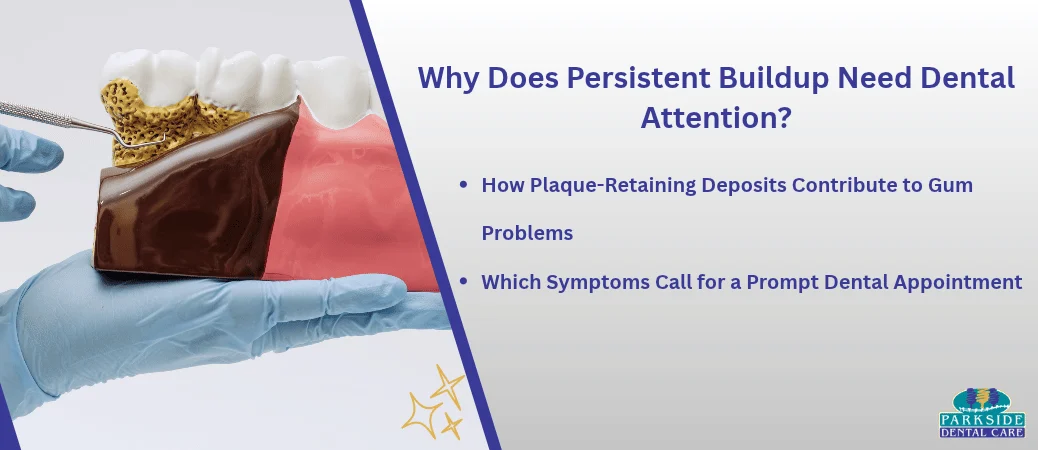
How Plaque-Retaining Deposits Contribute to Gum Problems
Your tartar deposits create rough surfaces that hold fresh plaque close to your gums. That makes daily cleaning harder and supports ongoing irritation.
If you develop gingivitis, your gums become inflamed without loss of the deeper support around your teeth. Professional cleaning and effective home care help reverse plaque-related gingivitis.
Gingivitis does not always progress to periodontitis, but untreated gum inflammation can increase the risk of more advanced gum disease.
If periodontitis develops, it can damage the tissues and bone supporting your teeth and may require ongoing periodontal care.
Which Symptoms Call for a Prompt Dental Appointment
Arrange a prompt appointment if you have repeated bleeding gums after brushing, swelling, or a persistent bad taste. New gum recession, loose teeth, and pain when chewing also need assessment.
You should mention bad breath that continues despite careful cleaning. These symptoms have several possible causes, so a cleaning alone might not address the whole problem.
Seek urgent dental care for pus, severe pain, or facial swelling. If you develop trouble breathing or swallowing, seek emergency medical care.
How Can You Reduce New Tartar Buildup?
You reduce new tartar by removing soft plaque thoroughly each day and following a cleaning schedule matched to your oral health. Give extra attention to the places where your hygienist finds recurring deposits.
Brush Gently With Fluoride Toothpaste and Clean Between Teeth
Brush twice daily for about two minutes with fluoride toothpaste and a soft-bristled brush. Use light pressure and angle the bristles toward the gumline.
For daily flossing, curve the floss around each tooth and slide it gently along the side. Avoid snapping it into your gums.
If floss is difficult to handle, ask about interdental brushes or a water flosser suited to your spaces and dental work.
You can strengthen your daily oral health habits by following the same path around your mouth each time. Include the tongue side of your lower front teeth and the far surfaces of your last molars.
What Electric Brushes and Tartar-Control Products Can Actually Do
You might find electric toothbrushes helpful for keeping a steady brushing time and reaching awkward surfaces.
A pressure sensor provides a useful reminder if you press too hard, while a manual brush remains a suitable option with careful technique.
Choose tartar-control toothpaste that also contains fluoride. Its tartar-control ingredients help reduce new deposits, and fluoride protects your teeth against decay.
If you need extra help controlling plaque-related gum inflammation, your dentist might recommend an antiseptic mouthwash.
Use it as directed alongside brushing and cleaning between teeth. Your water flosser serves the same supporting role in your home routine.
Why Buildup Can Return Despite Good Habits
You still develop plaque after a professional cleaning. Your saliva chemistry and hard-to-reach tooth surfaces influence where that plaque remains and how much mineral buildup follows.
Crowded teeth, fixed retainers, and dental restorations create areas that need special cleaning methods.
If you wear braces, your routine also needs attention around brackets to reduce stains and decay during orthodontic treatment.
Your dentist can recommend cleaning intervals based on your gum health, tartar buildup, and individual risk factors.
Although you might be familiar with six-month dental checkups, people with recurring heavy deposits or a history of periodontitis may benefit from more frequent professional care.
Leave Hardened Deposits to Your Dental Team

Your safest next step for a stubborn ridge is a dental assessment. Regular general and family dentistry appointments can help identify hardened deposits and other oral health concerns before they become more difficult to manage.
At Parkside Dental Care in Montgomery, AL, our dental team can evaluate persistent roughness, identify hardened tartar deposits, and recommend professional cleaning or periodontal care based on your gum health.
Your appointment is also an opportunity to discuss home cleaning techniques and a follow-up schedule suited to your needs.
Frequently Asked Questions
Your next step should be guided by an exam when tartar buildup or tooth roughness persists. These answers help you judge changes without trying to diagnose or scrape the area yourself.
Can hardened tartar fall off on its own?
You might notice a small piece of tartar break away during eating or brushing. You still need the area checked because deposits can remain, and a broken tooth or filling sometimes feels similar.
How long can tartar stay on teeth before causing damage?
You have no guaranteed safe period for leaving tartar on your teeth. Your risk depends on the plaque around it and your gum health, so book an assessment when you notice persistent buildup.
Does black tartar mean I have tooth decay?
You cannot tell whether you have decay from a black deposit alone. Staining and blood pigments darken tartar, while decay requires a dental exam and sometimes X-rays to identify.
Can natural remedies dissolve hardened tartar?
You cannot safely dissolve attached tartar with natural home remedies. Acidic mixtures risk harming your enamel, and oil pulling does not remove mineralized deposits.
Why do my teeth still feel rough after a cleaning?
You might be feeling a filling edge, exposed root surface, or a change in your enamel after cleaning. A remaining deposit is another possibility, so point out the exact area and have your dental team recheck it.