

Seeing blood in the sink after brushing can be easy to dismiss, but recurring bleeding gums after brushing deserve attention. Bleeding may result from brushing too hard, plaque buildup, or an early sign of gum disease.
If your gums are bleeding regularly, pay attention to other changes such as swelling, tenderness, or persistent bad breath. These can be oral health warning signs that should not be overlooked.
Your gums can also be affected by changes in your overall health, medications, and daily habits, which makes caring for your oral health especially important.
You will also learn what steps you can take right now to help your gums heal and stay healthy.
Whether this is a one-time thing or something you deal with often, understanding the cause can help you protect your smile for the long run.
Key Takeaways
- Bleeding gums when brushing can point to gum disease, poor brushing habits, or other health conditions.
- Certain health issues, hormone changes, and medications can also cause your gums to bleed.
- Knowing when to try home care versus when to see a dentist can help protect your oral health.
Table of Content
- What Bleeding After Brushing Can Signal
- Common Reasons Gums Bleed
- Health, Hormone, and Medication-Related Causes
- What to Do at Home and What to Avoid
- When to Book a Dental or Medical Assessment
- Professional Treatments for Persistent Gum Bleeding
- Frequently Asked Questions
What Bleeding After Brushing Can Signal
Bleeding gums usually mean plaque has built up along your gum line and caused some kind of irritation.
The good news is that catching this early can help you stop small problems before they turn into something more serious.
Healthy Gums Versus Inflamed Gums
Your healthy gums should look pale pink or coral. They should feel firm, not sore, and they should not bleed when you brush or floss.
Inflamed gums look and feel different. You might notice red gums, swollen gums, or gums that feel tender and sore to the touch.
Sensitive gums are another sign that something is off. If your gums sting or hurt during normal brushing, that is your body telling you there is some inflammation happening under the surface.
Here is a quick comparison:
| Healthy Gums | Inflamed Gums |
| Pale pink or coral color | Red or dark pink color |
| Firm texture | Puffy or swollen |
| No bleeding | Bleeds easily |
| No pain | Tender or sore |
How Plaque at the Gumline Triggers Bleeding
Plaque is a sticky film of bacteria that forms on your teeth every day. When it collects along your gumline, it irritates the soft tissue there and causes gum inflammation.
Your body reacts to this bacteria buildup by sending more blood to the area. That extra blood flow is why your gums bleed more easily when they are irritated.
If plaque buildup is not removed through brushing and flossing, it can harden into tartar. Tartar is tougher to remove and tends to make the irritation worse over time.
You may also notice bad breath or persistent bad breath when plaque builds up, since the bacteria release odor as they multiply near your gumline.
From Gingivitis to Periodontitis
Gingivitis is the first stage of gum disease. It causes red, swollen, and bleeding gums, but at this stage, your teeth and the bone underneath are still healthy.
You can reverse gingivitis with better brushing habits and regular dental cleanings.
If gingivitis is left untreated, it can turn into periodontitis. This is a more advanced form of periodontal disease that affects the structures holding your teeth in place.
At this stage, you might notice gum recession, where your gums pull away from your teeth. You could also experience loose teeth, changes in your bite, or even bone loss around the roots.
Without treatment, periodontitis can eventually lead to tooth loss. This is why ongoing bleeding paired with gum recession or loose teeth signals it’s time for a professional dental exam.

Common Reasons Gums Bleed
Bleeding gums can happen for a few different reasons, from how hard you brush to how well you clean between your teeth. Once you know what’s causing it, it’s much easier to fix.
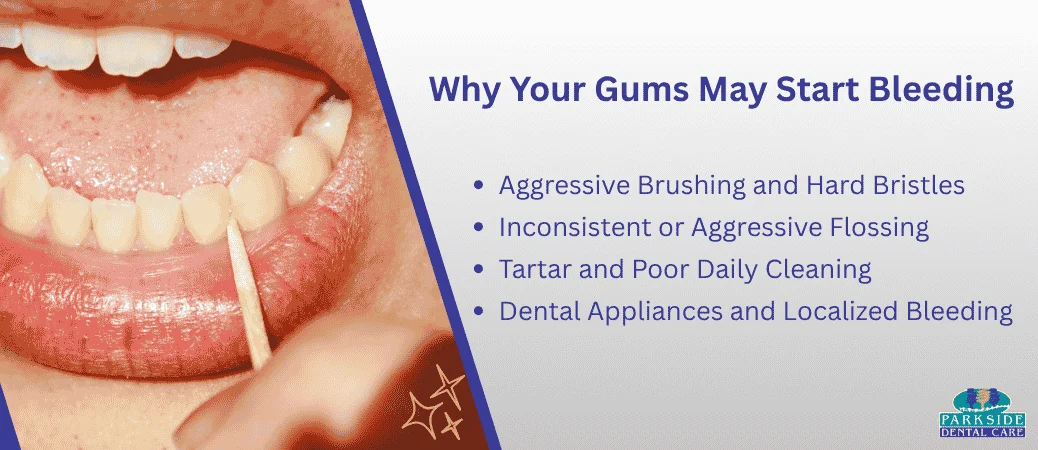
Aggressive Brushing and Hard Bristles
If your gums bleed most days, aggressive brushing might be the reason. Pressing too hard while brushing teeth can wear down your gum tissue and make it more likely to bleed.
A hard-bristled toothbrush can make things worse. The stiff bristles scrape against your gums instead of gently cleaning them.
Switching to a soft-bristled toothbrush is an easy fix. You should also try to use light pressure and let the bristles do the work instead of pushing hard.
An electric toothbrush can help too. Many models have built-in sensors that alert you if you’re pressing too hard, which takes the guesswork out of your routine.
Inconsistent or Aggressive Flossing
Your flossing habits matter just as much as brushing. If you skip flossing for a few days and then floss too hard, your gums may bleed.
Aggressive flossing can irritate the delicate tissue between your teeth, especially if you snap the floss down instead of guiding it gently.
Try to floss once a day using a smooth, gentle motion. If regular floss feels difficult, interdental brushes or a water flosser can be good alternatives.
A water flosser uses a stream of water to clean between teeth and may be more comfortable if you have sensitive gums.
Tartar and Poor Daily Cleaning
Tartar forms when plaque hardens on your teeth over time. Inconsistent brushing and flossing can speed up this buildup, while certain food and drink habits can also affect your oral health.
Once tartar builds up, it irritates your gum line. This can lead to swelling, tenderness, and bleeding, especially when you brush or floss.
Poor oral hygiene makes it easier for tartar and bacteria to collect near your gums. This is one of the most common causes of bleeding gums, since the irritation triggers inflammation known as gingivitis.
The good news is that a solid daily oral hygiene routine can help prevent this buildup. Brushing twice a day, flossing once a day, and visiting your dentist for cleanings can keep tartar from forming in the first place.
Dental Appliances and Localized Bleeding
Sometimes the cause is more specific than your daily habits. Dental appliances like braces, retainers, or ill-fitting dentures can rub against your gums and cause irritation in one particular spot.
If you notice bleeding around one tooth, it’s worth paying close attention. This kind of localized bleeding is often linked to a dental appliance putting pressure on that area, rather than a problem with your whole mouth.
Bruxism, or teeth grinding, can also play a role. Grinding puts extra stress on your gums and teeth, which may lead to soreness or bleeding over time.
If you wear dentures or another appliance and notice ongoing bleeding, it’s a good idea to have it checked for proper fit. A quick adjustment can often solve the problem.
Health, Hormone, and Medication-Related Causes
Sometimes bleeding gums have nothing to do with how you brush. Hormonal shifts, certain medications, and health conditions can all make your gums bleed more easily, even if you’re gentle with your toothbrush.
Pregnancy, Puberty, and Menopause
Your hormones play a bigger role in your gum health than you might think. During pregnancy, hormonal changes can increase blood flow to your gums, making them more sensitive and prone to bleeding.
This is sometimes called pregnancy gingivitis, and it’s a common experience for many expecting parents.
Puberty brings its own hormone surges, which can also make your gums swell and bleed more easily. Menopause is another time when hormone changes affect your gum tissue.
If you notice bleeding during these life stages, don’t panic. Just keep up with your oral care routine and mention it to your dentist at your next visit.
Blood Thinners and Other Medicines
Certain medications can make your gums bleed more than usual, even with normal brushing.
Blood thinners like aspirin and warfarin work by preventing your blood from clotting quickly, which means small cuts in your gums may bleed longer than they normally would.
If you’re taking anticoagulants for a heart condition or other reason, don’t stop your medication because of gum bleeding. Instead, talk to your doctor or dentist.
They can help you figure out if the bleeding is a normal side effect or something that needs more attention.
Some other medications can also affect your gum tissue, so it’s worth mentioning any new prescriptions to your dental team.
Medical Conditions and Nutritional Deficiencies
Your overall health has a direct connection to your gum health. Conditions like diabetes can make you more prone to gum infections and bleeding, since high blood sugar affects how well your body fights off bacteria.
Blood disorders, including leukemia, can also cause unusual gum bleeding as one of their early signs. This is less common, but it’s worth knowing about if your bleeding seems unusually heavy or doesn’t improve.
Your diet matters too. A lack of vitamin C or vitamin K can weaken your gum tissue and slow down clotting, leading to more bleeding. Low calcium levels may also play a role in your overall oral health.
Stress can affect your immune system in ways that make your gums more vulnerable as well. If you suspect a nutritional deficiency or systemic health issue, a simple blood test can help confirm what’s going on.
What to Do at Home and What to Avoid
Small changes to your daily routine can make a real difference in how your gums feel and look.
Along with good brushing and flossing habits, simple steps that help rejuvenate your smile can support better oral health over time.
Here’s what helps, what to avoid, and which tools can support healthier gums.
A Gentle Daily Oral Hygiene Routine
Your daily habits matter more than you might think. Brush your teeth twice a day for two minutes each time, and use gentle, small circular motions instead of hard back-and-forth scrubbing.
Flossing once a day helps remove plaque between your teeth, where your toothbrush can’t reach. If you’re new to flossing, don’t be surprised if you see some blood at first.
This usually fades within a week or two as your gums adjust.
Avoid skipping days or rushing through your routine. Consistency is what actually keeps plaque from building up along your gum line. Try brushing after breakfast and before bed so it becomes second nature.
Choosing Helpful Tools and Products
The tools you pick can either help or hurt your gums. Here’s a quick breakdown:
| Tool | Why It Helps |
| Soft-bristled toothbrush | Cleans effectively without scraping tender gum tissue |
| Fluoride toothpaste | Strengthens enamel and fights early decay |
| Interdental brushes | Clean between teeth without the snapping motion of floss |
| Water flosser (oral irrigator) | Uses water pressure to clear debris gently |
| Antibacterial or antimicrobial mouthwash | Reduces bacteria that cause inflammation |
Skip hard or medium bristles, and replace your toothbrush every three to four months. If your gums bleed no matter how gently you brush, a water flosser or interdental brushes might be worth trying instead of standard floss.
Diet and Lifestyle Changes That Support Gum Health
What you eat and how you live affects your gums just as much as your brushing habits. A balanced diet with plenty of fruits, vegetables, and foods rich in calcium and vitamin C supports stronger gum tissue.
Vitamin deficiencies, especially low vitamin C or vitamin K, can make your gums more likely to bleed. If your diet is missing these nutrients, gum problems may take longer to clear up even with good brushing habits.
Smoking and other tobacco products also slow healing and weaken your body’s ability to fight off gum infections. Cutting back, or quitting altogether, often leads to noticeably healthier gums within a few weeks.
Try to limit sugary and starchy snacks, since they feed the bacteria that irritate your gums.
When to Book a Dental or Medical Assessment
Most bleeding gums clear up with better brushing and flossing, but some signs mean you should not wait around. Here is how to tell the difference between minor irritation and something that needs professional care.

Signs That Need a Prompt Dental Visit
If your gums bleed for more than a week, even with gentle brushing, it’s time to call your dentist. This is one of the clearest signs that gentle brushing and flossing alone won’t fix the problem.
You should also book a dental checkup if you notice persistent bad breath that doesn’t go away after brushing. Bad breath combined with bleeding often points to bacteria building up below the gumline.
Watch out for bleeding around one tooth in particular. This can mean there’s a local problem, like trapped food, a cracked filling, or an infection in that specific spot.
Other signs to watch for include:
- Gums that look puffy, dark red, or shiny
- Swelling that doesn’t improve after a few days
- Pain when you chew or touch the area
- A bad taste that keeps coming back
What a Dentist or Periodontist Checks
When you visit the dentist, they will look closely at your gums, teeth, and the spaces between them.
They may gently measure pockets around each tooth to see how deep they are, since deeper pockets can be a sign of gum disease.
You may need a professional dental cleaning to remove plaque and tartar that a toothbrush can’t reach.
If the damage looks more advanced, your dentist might refer you to a periodontist, who specializes in treating gum problems.
The exam may also uncover other issues tied to your bleeding gums, such as:
| What They Check | What It Might Mean |
| Gum pockets | Early or advanced gum disease |
| Receding gums | Long-term irritation or brushing too hard |
| Loose teeth | Bone loss from gum disease |
| Mouth sores or patches | Possible signs of oral cancer |
Based on what they find, your dentist will recommend a plan for gum disease treatment, which might include a deep cleaning, medicine, or a follow-up.
Emergency and Medical Red Flags
Some symptoms need more urgent attention. If you have facial swelling, a fever, or a painful bump near your gum line, you could have a dental abscess, which is an infection that needs prompt treatment.
These symptoms may indicate a dental emergency that should not be ignored.
If symptoms develop suddenly or become severe, knowing how to deal with a dental emergency can help you take appropriate steps while seeking professional care.
You should also talk to a doctor if your gums bleed along with easy bruising, tiredness, or bleeding that doesn’t stop quickly. These signs can sometimes be associated with underlying medical conditions.
People with diabetes should pay close attention to their gums, too. High blood sugar can slow healing and make gum infections harder to manage.
If your gum issues seem connected to your overall health, discuss them with your doctor and dentist. Addressing unusual symptoms early can help identify the cause and determine the appropriate care.
Professional Treatments for Persistent Gum Bleeding
If your gums keep bleeding no matter how gently you brush, it’s time to see a dentist or periodontist.
Your treatment will depend on how much plaque and tartar have built up and whether you have early gum disease or something more advanced.
Professional Cleaning for Plaque and Tartar
A professional dental cleaning is usually the first step your dentist will try. This treatment removes plaque and tartar that your toothbrush and floss can’t reach, especially along and below your gumline.
Tartar is hardened plaque, and it can only be removed with special dental tools. Once it’s gone, your gums have a chance to heal and stop bleeding.
You’ll likely notice less swelling and bleeding within a couple weeks after your cleaning. Your dentist may also give you tips on brushing and flossing to help keep plaque from building back up.
Scaling and Root Planing for Periodontal Disease

If plaque and tartar have spread below your gumline, you may need scaling and root planing. This is often called a deep dental cleaning, and it treats early to moderate periodontal disease.
Scaling removes tartar from your tooth surfaces and roots. Root planing smooths out the roots so your gums can reattach to your teeth more easily.
This treatment can take more than one visit, and your dentist may use a numbing gel or other measures to help you overcome anxiety and feel comfortable during treatment.
It’s a common and effective way to treat gum disease before it causes lasting damage.
Advanced Periodontal Care
If your gum disease has turned into periodontitis, you may need to see a periodontist for more advanced care. Periodontitis can lead to bone loss around your teeth, and without treatment, it can eventually cause tooth loss.
Your dentist may recommend antibiotics to fight infection or periodontal surgery to repair damaged gum and bone tissue.
One option is osseous surgery, which reduces the size of pockets that form between your teeth and gums.
In more severe cases, laser periodontal surgery may be used to target infected tissue with less discomfort. Your dentist will explain which option fits your situation best, based on how much damage has occurred.
Frequently Asked Questions
Bleeding gums come up a lot, and you probably have questions about what causes them and what to do next. Here are answers to the most common ones.
Is it normal for my gums to bleed when I brush my teeth?
A little bleeding once in a while is not a big deal. But if your gums bleed every time you brush, that is not normal.
Regular bleeding usually means plaque has built up along your gum line. This causes inflammation, which is your gums’ way of telling you something is wrong.
Why do my gums bleed even though I brush every day?
Brushing every day helps, but it does not always mean you are doing it the right way. You might be brushing too hard or using a stiff-bristled brush, which can irritate your gums.
Skipping flossing can also leave plaque between your teeth, where your toothbrush cannot reach. Over time, this plaque can lead to swollen, bleeding gums even if your brushing routine seems solid.
Can bleeding gums be a sign of gingivitis or gum disease?
Yes, bleeding gums are often the first sign of gingivitis, which is an early stage of gum disease. Gingivitis happens when plaque irritates your gums and causes swelling.
If you ignore it, gingivitis can turn into periodontal disease. This is a more serious condition that can damage the bone and tissue holding your teeth in place.
What vitamin deficiency can cause bleeding gums?
Low levels of vitamin C and vitamin K can cause your gums to bleed. Vitamin C helps your gums heal and stay strong, so not getting enough can make them more likely to bleed.
Vitamin K plays a role in helping your blood clot properly. Without enough of it, small cuts or irritation in your mouth may bleed more than usual.
How can I stop my gums from bleeding when I brush?
Start by switching to a soft-bristled toothbrush and being gentler when you brush. Floss once a day to remove plaque between your teeth.
Rinsing with warm salt water can also help calm irritated gums. If you smoke, cutting back or quitting can make a noticeable difference too.
When should I see a dentist about bleeding gums?
If your gums keep bleeding for more than a week or two, it is time to make an appointment. This is especially true if the bleeding does not improve with better brushing and flossing habits.
You should also see a dentist if you notice other symptoms like swollen gums, bad breath, or loose teeth. These can be signs of a more serious problem that needs professional care.