
Losing a tooth is stressful, and figuring out how to replace it can feel just as hard. A dental implant consultation is your chance to get real answers before you commit to anything.
The best dental implant consultation in Montgomery, AL, gives you a clear plan: whether you’re a good candidate, what the full treatment will cost, how long healing takes, and what your day-to-day life will look like along the way.
An experienced dentist in Montgomery, AL will walk you through your options, take 3D images of your jaw, and explain why they’re recommending a certain approach for your missing teeth.
The tricky part is knowing what to ask. Most people leave their first visit with more questions than they came in with, simply because they didn’t know what to bring up.
The questions below cover everything from your candidacy and bone density to payment plans, so you can walk in prepared and walk out feeling confident about your tooth replacement.
Key Takeaways
- A strong consultation includes an oral health exam, advanced imaging of your jawbone, and a treatment plan built around your goals.
- Ask about your candidacy, surgery timeline, recovery, and whether you’ll need extra steps like a bone graft or sinus lift.
- Request a full written quote and check your provider’s experience, technology, and reviews before saying yes.
Table of Content
- What a Thorough Consultation Should Include
- Questions About Your Implant Candidacy
- Questions About Your Recommended Tooth Replacement
- Questions About Implant Surgery and Recovery
- Questions About Cost, Insurance, and Long-Term Care
- How to Choose a Provider With Confidence
- Frequently Asked Questions
What a Thorough Consultation Should Include
A real implant consultation takes 45 minutes to an hour, and it should cover your health background, a hands-on exam of your mouth, digital imaging of your jaw, and a written plan with costs.
If your visit skips any of these steps, it’s fair to ask why.
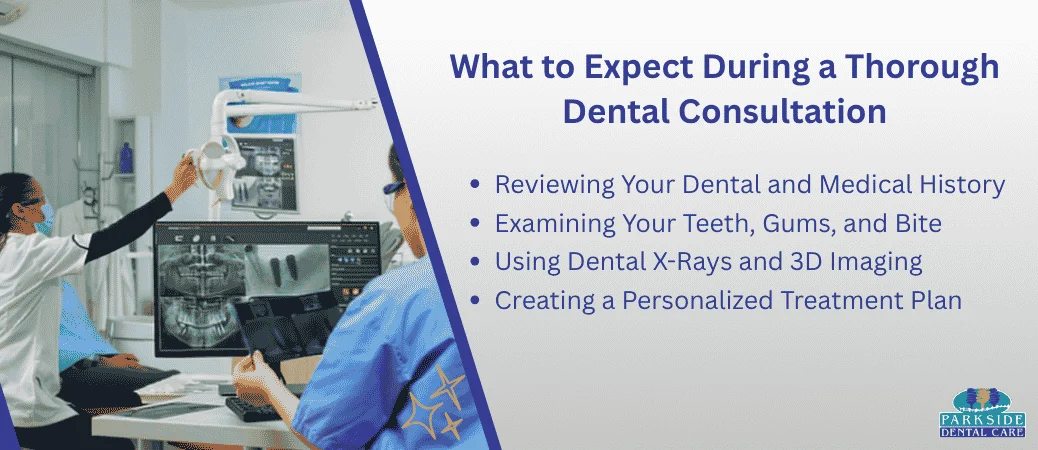
Reviewing Your Dental and Medical History
Your implant dentist starts with questions about your health, not your teeth. That’s because healing depends on your whole body, not just your gums.
Bring a current list of your medications and supplements. Some drugs, like bisphosphonates for bone loss, affect how bone heals and may change your treatment plan.
Be ready to talk about:
- Diabetes and how well it’s controlled
- Heart conditions or blood thinners
- Past radiation to the head or neck
- A history of gum disease or a failed implant
- Smoking or vaping habits
Honesty helps here. Being upfront about habits like smoking lets your provider give you a realistic success estimate instead of a guess.
Examining Your Teeth, Gums, and Bite
Next comes the clinical exam. Your dentist checks the space where the tooth is missing, plus the teeth on either side of it.
Gum health matters just as much as bone. Thin or inflamed gum tissue around an implant site can lead to problems later, so your provider measures pocket depths and looks for signs of active infection.
Your bite gets checked too. If you grind your teeth or your bite puts uneven pressure on one area, that extra force can loosen a crown or stress the implant over time.
You may also hear a referral suggestion at this point. A periodontist often handles gum and bone concerns, while an oral surgeon may step in for extractions or complex placement.
Using Dental X-Rays and 3D Imaging
Dental x-rays give a flat view of your teeth and roots. Helpful, but not enough on their own for implant planning.
That’s why most offices in Montgomery use dental technologies such as CBCT scan, a 3D image of your jaw that takes under a minute. It shows bone height, bone width, and the exact position of nerves and sinuses.
With that scan, your dentist can answer real questions:
- Is there enough bone to hold an implant?
- Do you need a bone graft or sinus lift first?
- Where exactly will the implant go?
Ask whether the scan is included in your consultation fee. Some offices bundle it in, and others bill it separately.
Creating a Personalized Treatment Plan
By the end of the visit, you should walk out with something in writing. A verbal “we’ll figure it out” isn’t a plan.
Your plan should spell out how many implants you need, whether any prep work comes first, and roughly how long each stage takes. Healing between placement and the final crown often runs three to six months.
The cost breakdown should be itemized. Ask for financing options that cover the implant, abutment, crown, and follow-up visits so nothing surprises you later.
Also ask what your dental insurance covers. Many plans pay for part of the crown but not the implant post, so knowing that early helps you plan payments or financing.
Questions About Your Implant Candidacy
Before your dentist places an implant, they need to know if your jawbone, gums, and overall health can support it. Your answers to a few key questions will shape your treatment plan and timeline.
Do I Have Enough Jawbone for Implants?
A dental implant is a titanium post that sits inside your jawbone, so you need enough bone height and width to hold it steady.
Your dentist will check your bone density using X-rays and often 3D imaging. Many Montgomery offices use advanced imaging during the consultation to measure your bone before making any decisions.
If your bone is too thin, you may need a bone graft or a sinus lift first. A bone graft strengthens the jaw so the implant has solid support.
Good questions to ask:
- How much bone do I have where the tooth is missing?
- Do I need bone grafting, and how long does it take to heal?
- Will grafting change my total cost?
Will Gum Disease Need Treatment First?
Yes, in almost every case. Active gum disease means bacteria and inflammation are already attacking the tissue and bone that would need to hold your implant.
Untreated gum disease raises your risk of implant failure, so dentists usually recommend gum disease treatment before surgery. That might mean deep cleaning, antibiotics, or a referral to a periodontist.
Ask your dentist:
- Do I have gingivitis or a more advanced stage of gum disease?
- What treatment do I need before implant placement?
- How will you check that my gums have healed enough?
Your daily oral hygiene matters here too. Brushing twice a day and flossing helps prove you’re ready for a restoration that needs the same care as a natural tooth.
How Do Diabetes, Smoking, and Medications Affect Healing?
These three factors affect how well your body heals after surgery, and healing is what makes an implant work.
Diabetes: Well-controlled blood sugar usually isn’t a barrier. Poorly controlled diabetes slows healing and raises infection risk, so your dentist may ask for a recent A1C number.
Smoking: Smoking reduces blood flow to the gums and can prolong healing. Many dentists ask patients to stop for several weeks before and after surgery.
Medications: Blood thinners, steroids, and bone medications like bisphosphonates can change your surgery plan. Bring a full list of what you take, including supplements.
Ask: Given my health history, what is my realistic success rate, and what can I do to improve it?
Can I Still Qualify After Previous Bone Loss or Tooth Loss?
Often, yes. Losing a tooth years ago doesn’t rule you out, though it does change the plan.
When a tooth is gone, the jawbone in that spot shrinks over time because it no longer gets pressure from chewing. That bone loss is common, and grafting can rebuild much of it.
Other options exist too. Shorter or narrower implants can work in tight spaces, and full-arch implants like All-on-4 use the areas where bone is strongest.
Questions worth asking:
| Ask This | Why It Matters |
| Can grafting restore what I lost? | Tells you if implants are possible at all |
| Are there implant types that fit my bone? | May avoid extra surgery |
| What happens if the graft doesn’t take? | Sets clear expectations |
If implants aren’t a fit right now, ask what would need to change to qualify later.
Questions About Your Recommended Tooth Replacement
No two smiles need the same fix, so your dentist should explain exactly which type of tooth replacement fits your situation.
Ask about the number of implants, the materials in your new teeth, and whether you’ll leave the office with something to smile with while you heal.
Will I Need a Single Implant, Bridge, or Implant-Supported Dentures?
The right choice usually comes down to how many teeth are missing and where they sit in your mouth.
- Single implant with a crown: Best for one missing tooth. A single-tooth implant replaces one tooth without grinding down the healthy teeth next to it.
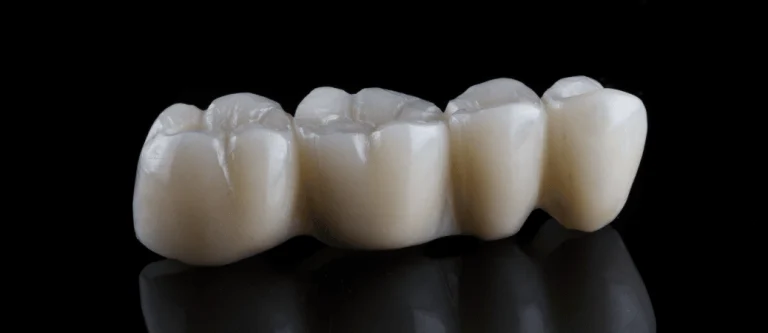
- Implant-supported bridge: Good for three or four missing teeth in a row. Two implants hold a run of connected artificial teeth.
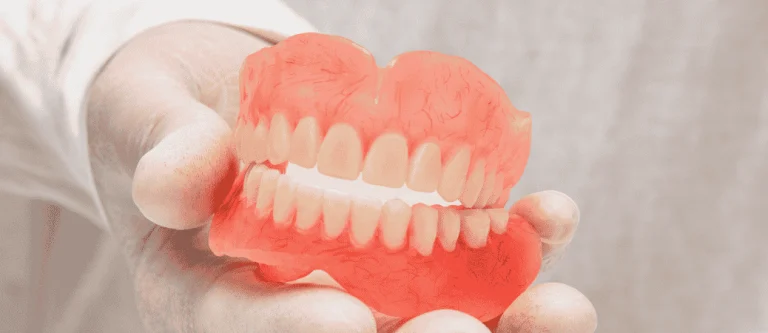
- Implant-supported dentures: Made for a full arch. These snap onto implants instead of resting on your gums like removable dentures.
Ask your dentist why one option beats the others for you. A traditional dental bridge, for example, relies on neighboring teeth for support, while an implant stands on its own.
How Many Implants Will My Smile Need?
You don’t need one implant for every missing tooth. That surprises a lot of people.
A full upper or lower arch can often be supported by four to six tooth implants, depending on your bone and bite. Three missing teeth in a row might only need two implants with a bridge between them.
Ask these questions:
- How many implants are in my written treatment plan?
- Why that number instead of more or fewer?
- Does my jawbone have enough thickness, or will I need a graft first?
- Will all the implants be placed in one appointment?
The number of implants directly affects your cost, so get it in writing before you agree to anything.
What Materials Will Be Used for My Restoration?
Your replacement tooth has two main parts, and they’re usually made of different things.
| Part | Common Materials | What It Does |
| Implant post | Titanium or zirconia | Sits in the jawbone as an artificial root |
| Abutment | Titanium or zirconia | Connects the post to your new tooth |
| Crown or bridge | Porcelain, zirconia, porcelain-fused-to-metal | The part you see and chew with |
Ask which material your dentist recommends for a front tooth versus a back molar. Front teeth need a dental crown that matches the color and translucency of your natural enamel.
Back teeth take more chewing force, so strength matters more there.
It’s also fair to ask if you have any metal sensitivities that could affect the choice.
Will I Have a Temporary Tooth During Treatment?
Healing takes time. The bone needs to fuse to the implant, and that usually runs three to six months.
You shouldn’t have to walk around with a gap that whole time, especially if the space shows when you smile. Ask your dentist what you’ll wear in the meantime.
Common options include:
- A temporary crown attached to the implant
- A removable flipper (a small partial denture)
- A clear retainer with a tooth attached
- Temporary dentures for full-arch cases
Also ask what you can eat with the temporary, and whether it costs extra.
Questions About Implant Surgery and Recovery
Knowing who performs your surgery, how you’ll be kept comfortable, and how long healing takes helps you plan the months ahead.
Ask about each stage so there are no surprises between the day your implant post goes in and the day your new tooth is attached.
Who Will Perform Implant Placement?
Ask your dentist directly: will they place the implant, or will they refer you to a specialist?
At Parkside Dental Care, your dental team can explain who will handle each stage of your implant treatment and how your care will be coordinated.
In some cases, an oral surgeon places the implant while your general dentist makes and attaches the crown. Both providers work together to plan your care.
Good follow-up questions:
- How many implants have you placed?
- Do you use 3D imaging or a surgical guide?
- Who handles complications or a failed implant?
- Will I be charged separately by each doctor?
What Type of Anesthesia Will Be Used?
Most single-tooth dental implant surgeries are done with local anesthesia. You stay awake, but the area is completely numb.
If you feel anxious, ask about sedation options. Common choices include nitrous oxide, oral sedation in pill form, and IV sedation for longer or more complex cases like full-arch treatment.
Each option has different rules. With IV or oral sedation, you’ll need someone to drive you home and you may need to stop eating several hours beforehand.
Ask what sedation costs, since insurance often doesn’t cover it. Also tell your provider about every medication and supplement you take, including blood thinners and diabetes medication, because these affect both anesthesia and healing.
How Long Will Osseointegration and Healing Take?
Osseointegration is the process where your jawbone grows around the titanium implant post and locks it in place. This is what makes an implant stable enough to chew on.
For most people it takes three to six months, depending on bone quality and where the implant sits. Lower jaw implants often fuse faster than upper jaw implants.
If you needed a bone graft or sinus lift first, add several more months before placement even begins.
Ask what you’ll wear during that waiting period. A temporary bridge or removable tooth can fill the gap, and in some cases the implant can be loaded with a temporary crown right away.
Once healing is confirmed, the abutment is attached and impressions are taken for your final crown.
What Should I Expect After Oral Surgery?
Many patients report that implant placement feels easier than a tooth extraction. Still, ask for specifics about the first week.
Typical recovery includes:
| Timeframe | What’s common |
| First 24 hours | Bleeding, numbness fading, ice packs |
| Days 2–3 | Peak swelling and bruising |
| Days 4–7 | Soreness fades, soft foods |
| 1–2 weeks | Gum tissue closes over the site |
Ask which pain medication you’ll get, whether antibiotics are prescribed, and what foods to avoid. You should also ask about warning signs.
Numbness in your lip or chin that lasts, growing pain after day three, or fever are all reasons to call the office right away.
Questions About Cost, Insurance, and Long-Term Care
Money questions deserve just as much attention as clinical ones. Before you agree to dental implant treatment, get a clear picture of what you will pay, what your dental insurance might cover, and how you will care for the implant once it is finished.

What Is Included in the Written Cost Estimate?
Ask for an itemized estimate you can take home and read. A single implant usually runs between $3,000 and $6,000 once you add up all the parts.
Make sure the paper lists each piece separately:
- The implant post placed in your jawbone
- The abutment, or connector piece
- The dental crown that sits on top
- 3D imaging, such as a cone-beam CT scan
- Bone grafting, if your jaw needs extra support
- Follow-up visits and the final fitting
Also ask what happens if your dentist finds something unexpected during surgery.
Will Dental Insurance Cover Any Part of Treatment?
Coverage varies a lot from plan to plan. Some policies treat implants as a major procedure and pay a percentage. Others leave them out completely.
Call your insurance company before you schedule anything and ask about:
| What to Ask | Why It Matters |
| Annual maximum | Many plans cap yearly benefits around $1,000–$2,000 |
| Waiting period | You may need coverage for 6–12 months first |
| Pre-authorization | Skipping this step can mean a denied claim |
| Crown vs. surgery | Some plans cover the crown but not the post |
Your dental office can often submit a pre-treatment estimate for you. Medical insurance sometimes helps too, especially if your tooth loss came from an injury or illness.
What Are My Payment and Financing Options?
Dental implant treatment can involve several stages, so it helps to understand the costs and payment schedule before getting started.
Ask the office when payments are due and what financing options are available to help manage treatment costs.
Before moving forward, ask whether a deposit is required, whether any financing terms apply, and which parts of your treatment are included in the estimate.
Common options include:
- In-house payment plans spread over several months
- Third-party financing through companies like CareCredit or LendingClub
- HSA or FSA funds, which you can usually use for implants
- Discount memberships offered by some practices for patients without insurance
Find out if there is a deposit, whether it is refundable, and if any interest applies. If a surgeon places your implant and a separate dentist restores it, ask whether you will get two different bills.
How Do I Protect My Implant After It Is Restored?
Your implant will not decay, but the gum and bone around it still can get sick. Peri-implantitis is an infection that leads to bone loss and, in some cases, implant failure.
Good oral hygiene keeps that risk low:
- Brush twice a day with a soft brush
- Clean between teeth daily using floss, an implant-safe floss threader, or a water flosser
- Skip tobacco, which slows healing and hurts gum health
- Get professional cleanings every six months, or more often if your dentist suggests it
- Wear a night guard if you grind your teeth
Ask your dentist how often they want to see you and take X-rays. Also ask what warranty covers the crown or post if something loosens or breaks.
How to Choose a Provider With Confidence
The person placing your implant matters just as much as the implant itself. Training, honest answers, and a clear plan for problems are three things worth checking before you say yes.
What Training and Experience Does the Provider Have?
Dental implants can be placed by a general dentist with implant training, an oral surgeon, or a periodontist. Any of these can be a good fit, but the amount of hands-on experience varies a lot from office to office.
At your dental implant consultation, ask direct questions:
- How many implants have you placed in the past year?
- Did you complete a residency, fellowship, or continuing education program in implant dentistry?
- Do you place the implant and make the crown here, or refer part of it out?
- Can I see before-and-after photos of cases like mine?
Also ask about technology. Many practices in Montgomery use 3D cone beam scanning to map bone and nerve position before surgery, which helps with placement accuracy.
At Parkside Dental Care, Dr. David Loveless takes the time to answer your questions, explain the recommended implant treatment, and help you understand what to expect before moving forward.
When Is a Second Opinion Worth Considering?
Getting a second opinion is normal, and a good dental practice in Montgomery, AL won’t be offended by it. In fact, checking reviews and asking for a second opinion is often suggested as part of choosing a provider.
Consider seeing another provider when:
- The quotes differ widely. A few thousand dollars of difference deserves an explanation.
- You’re told you need bone grafting or a sinus lift, and you want that confirmed.
- You feel rushed into signing a treatment plan the same day.
- You were told you’re not a candidate, but no clear reason was given.
Bring your X-rays or 3D scan with you. That saves you a second round of imaging and lets the new provider compare notes on the same information.
How Will the Dental Team Handle Complications or Implant Failure?
Implant success rates are high, but nothing is guaranteed. Infection, loosening, and implant failure do happen, and smoking or uncontrolled health conditions raise that risk.
Ask these questions before treatment starts:
| Question | Why It Matters |
| Is there a warranty on the implant or crown? | Tells you who pays if it fails |
| What happens if the implant doesn’t fuse with the bone? | Replacement may need months of healing first |
| Who do I call after hours if something hurts? | You want a real answer, not voicemail |
| Are follow-up visits included in the price? | Follow-up appointments are part of good implant care |
Get the answers in writing. A clear policy up front is a sign the practice has handled these situations before and isn’t guessing.
Frequently Asked Questions
Below are answers to the questions patients in Montgomery ask most often, covering candidacy, appointment steps, timelines, bone grafting, pricing, and how to check a provider’s track record.
Am I a good candidate for dental implants?
Most healthy adults with one or more missing teeth can get implants. You need enough jawbone to hold the post, healthy gums, and good daily brushing and flossing habits.
Some conditions make things trickier. Uncontrolled diabetes, a history of head or neck radiation, or medications like bisphosphonates can affect healing, so a specialist referral is often recommended in those cases.
Smoking also raises the risk of implant failure. Your dentist may ask you to cut back or quit before surgery. Gum disease needs to be treated first. Active infection around the remaining teeth can spread to a new implant site.
What should I expect during my first implant consultation?
Plan on about 45 minutes to an hour. Your dentist will review your medical history, examine your mouth, and check the health of the gum tissue and nearby teeth.
Imaging is a big part of the visit. Many Montgomery offices, including those that offer advanced imaging during the implant consultation, use a 3D CBCT scan to measure bone height and width and locate nerves and sinuses.
You’ll also talk through your goals. Bring a list of your medications, your dental insurance card, and any recent X-rays from another office.
Ask for a written treatment plan before you leave. It should list each step, the timeline, and the cost of every part.
How long will the dental implant process take from start to finish?
For a single tooth with good bone, expect roughly three to six months. The post needs time to fuse with the jawbone, a process called osseointegration.
Here’s a rough breakdown:
- Consultation and planning: 1–2 visits
- Extraction, if needed: 2–3 months of healing before placement
- Implant placement surgery: 1–2 hours per implant
- Healing and fusing: 3–6 months
- Abutment and crown: 2–3 visits over a few weeks
Bone grafting adds time. A graft usually needs three to six months of its own before the implant can go in.
Full-arch cases can move faster in some ways. Certain protocols allow a temporary set of teeth the same day, with the final restoration placed months later.
Will I need a bone graft or other preparatory treatment before getting implants?
Maybe. Bone starts to shrink after a tooth is lost, so people who have been missing a tooth for years often need extra support.
Your CBCT scan will answer this question. If the bone is too thin or too short, your dentist may suggest a graft, a sinus lift for upper back teeth, or a ridge expansion.
Grafting material can come from your own body, a donor, an animal source, or synthetic material. Ask which type your dentist plans to use and why.
Other prep work might include treating gum disease, pulling a failing tooth, or adjusting a bite problem. Ask whether these steps are included in your quoted price or billed separately.
What are the costs involved, and does dental insurance cover any part of treatment?
Consultation fees range from free to about $300, and some offices include the CBCT scan in that price while others bill it on its own. It’s worth asking when you call to schedule.
A single implant with the post, abutment, and crown typically runs $3,000 to $6,000, depending on the provider and how complex your case is. Full-arch restorations often fall between $15,000 and $30,000 or more per arch.
Bone grafting adds anywhere from a few hundred dollars to $3,000 or more, based on the size and type of graft.
Insurance coverage varies a lot. Some plans pay part of the crown but not the implant post, some cover neither, and medical insurance sometimes helps if tooth loss was caused by an accident or illness.
Ask the office to verify your benefits in writing before you commit. Many Montgomery practices also offer payment plans or third-party financing.
What questions should I ask about the dentist’s implant experience and success rates?
Ask how many implants the dentist places each year and how long they’ve been doing it. Volume matters, and so does ongoing training.
A few more worth asking:
- What is your success rate, and how do you track it?
- Which implant brand and system do you use?
- Do you place and restore the implant yourself, or work with another provider?
- Can I see before-and-after photos of similar cases?
- What happens if the implant fails, and is there a warranty?
Advanced training is a fair thing to ask about, too. Dentists must complete extra years of education beyond dental school, and reviewing dentist experience and expected outcomes helps you compare options.
Don’t feel awkward asking for a second opinion. A confident dentist will understand, and comparing two plans can help you feel sure about your decision.